
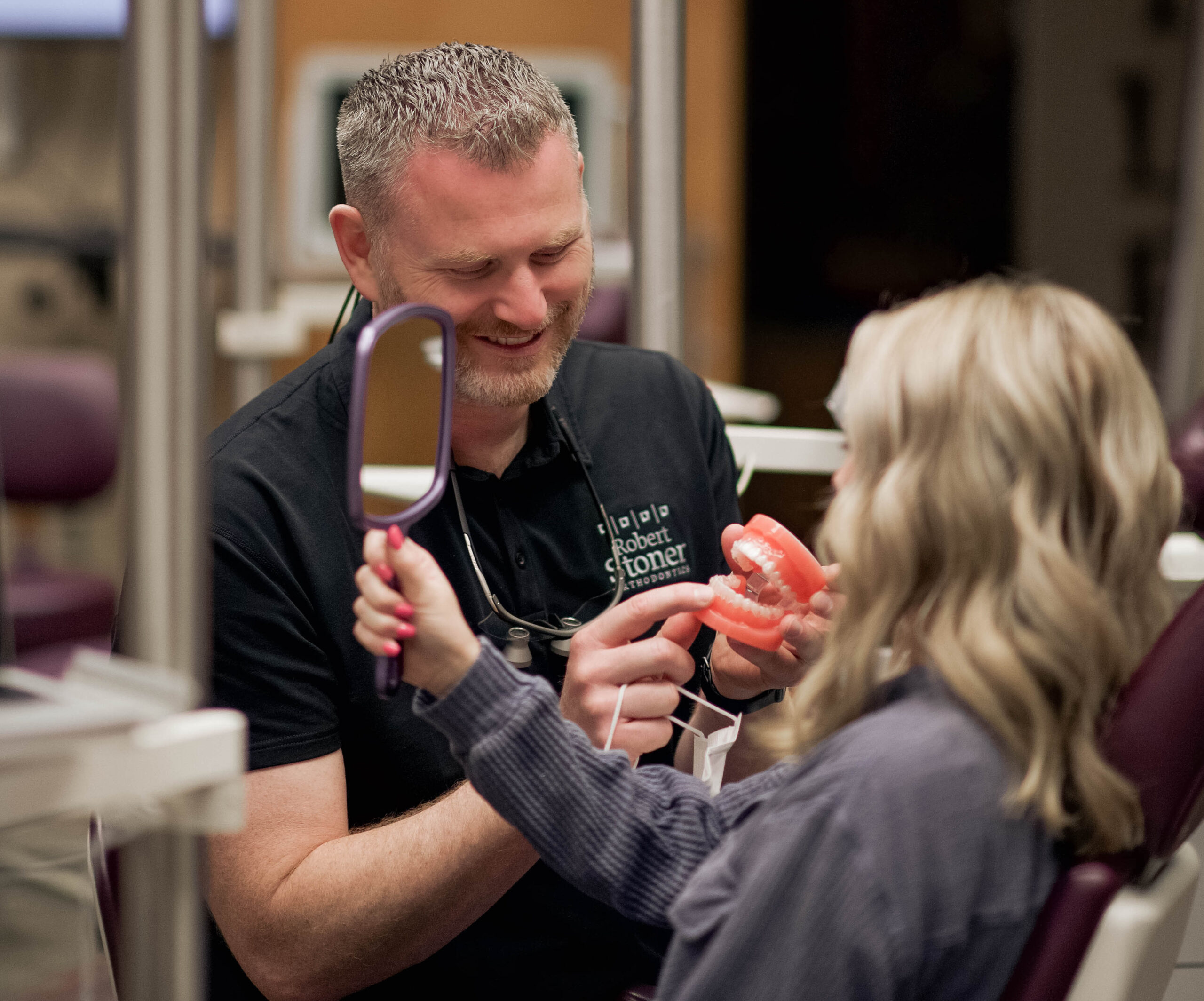
If you’re wondering whether it’s too late to get braces or Invisalign as an adult, the short answer is no. It’s never too late. Healthy teeth can be moved at any age, and there’s no upper age limit for braces or Invisalign. According to the American Association of Orthodontists, roughly one in three orthodontic patients today is an adult over 18. If you’ve been putting off treatment because you thought you missed your window, you haven’t.
Adult orthodontics addresses the same concerns that bring teens into treatment: crowding, spacing, bite issues, and jaw alignment. The difference? Adults often come in with clearer goals and stronger motivation. Maybe you’ve lived with a crooked smile for decades, or your teeth have shifted over time.
Whatever the reason, whether you never had the chance to get braces as a kid or your teeth moved after earlier treatment, adults make up a growing share of orthodontic patients. The options available today are more comfortable and discreet than ever before.
What matters most isn’t your age. It’s the health of your teeth and gums. Healthy bone and supporting structures allow teeth to move safely and predictably, whether you’re 25 or 65. Board-certified orthodontist Dr. Robert Stoner treats adults of all ages in Greensboro and tailors each treatment plan to the individual. With options that look and feel nothing like the braces you remember, there’s really nothing holding you back.
How Does Adult Orthodontic Treatment Work?
Adult orthodontic treatment relies on bone remodeling, the same biological process used in teen treatment. Getting started is simpler than you might expect.
At Robert Stoner Orthodontics, your treatment begins with a consultation that includes digital 3D X-ray technology, digital oral scanning technology, and a full evaluation. This information shapes a treatment plan built around your specific needs and goals.
Here’s how the process typically unfolds:
- Initial evaluation: Your teeth, bite, and jaw alignment are examined using digital 3D X-ray technology and digital oral scanning technology. No messy impressions needed.
- Custom treatment planning: Based on your evaluation, you’ll receive a clear plan showing how your teeth will move and approximately how long treatment will take.
- Active treatment: Whether you choose braces or clear aligners, your teeth gradually shift into their new positions through bone remodeling. This biological process works the same way in adults as it does in teenagers.
- Regular check-ins: Periodic visits allow your orthodontist to monitor progress and make any needed adjustments.
- Retention phase: Once your teeth reach their final positions, retainers keep them in place. Because teeth can continue to move throughout life, wearing retainers long-term protects your investment.
Treatment typically takes 12 to 36 months, depending on complexity. If you have existing dental work like crowns or bridges, your orthodontist coordinates with your general dentist to make sure everything fits together properly.
Benefits of Getting Braces or Invisalign as an Adult
Straightening your teeth as an adult at Robert Stoner Orthodontics offers benefits that go well beyond appearance. Here are the key reasons adults pursue orthodontic treatment:
- Easier brushing and flossing, which reduces cavities and gum disease
- Relief from jaw soreness, chronic headaches, and TMJ symptoms
- Greater confidence in professional and social settings
- Protection for existing dental work like crowns and veneers
- Reduced abnormal wear patterns on teeth
- Better long-term oral health and fewer dental issues over time
How Does Straightening Teeth Improve Oral Health?
Straight teeth are easier to brush and floss effectively, which reduces your risk of cavities, gum disease, and the complications that come with them. When teeth overlap or crowd together, food and bacteria get trapped in spots that are hard to reach. Correcting alignment makes daily hygiene more effective and helps protect your long-term dental health.
Can Orthodontic Treatment Relieve Jaw Discomfort?
Correcting bite issues can ease jaw soreness, chronic headaches, and TMJ symptoms that many adults have lived with for years. When your bite is off, the muscles and joints in your jaw compensate in ways that create tension and discomfort. Bringing the bite into proper alignment often provides meaningful relief.
Beyond Health: Confidence, Protection, and Better Results
- Feeling genuinely good about your smile makes a difference in professional settings, social situations, and everyday interactions. Many adults tell us they wish they’d started treatment sooner.
- Proper alignment reduces abnormal wear patterns. If you’ve invested in crowns, veneers, or other dental work, orthodontic treatment helps protect those investments over time.
- Because you’re choosing this for yourself, you’re more likely to follow through and see great results. That motivation often translates into faster, more predictable outcomes.
The benefits add up over time. A healthier smile today means fewer dental issues down the line.
Braces vs. Invisalign for Adults: Which Option Is Right for You?
Both braces and Invisalign work well for adults. Braces excel for complex cases, while clear aligners offer near-invisible treatment for mild to moderate issues. Here’s how they compare:
| Factor | Traditional Braces | Clear Aligners (Invisalign) |
|---|---|---|
| Visibility | Metal or ceramic brackets visible on teeth | Nearly invisible when worn |
| Removability | Fixed throughout treatment | Removable for eating and cleaning |
| Complex cases | Excellent for severe bite issues | Best for mild to moderate cases |
| Eating | Some food restrictions apply | No restrictions, just remove aligners |
| Oral hygiene | Requires careful cleaning around brackets | Brush and floss normally |
| Compliance | Works 24/7 with no compliance needed | Must wear 20-22 hours daily |
Traditional braces remain the gold standard for complex cases. Severe bite issues, significant crowding, and certain tooth movements respond particularly well to braces. Our practice uses state-of-the-art self-ligating brackets that offer real advantages over conventional braces, including shorter treatment times and increased comfort.
Clear aligners like Invisalign offer a nearly invisible option that fits easily into adult life. You can remove them for important meetings, meals, and photos. For mild to moderate cases, they’re just as effective as braces.
You’re not limited to one option. Dr. Stoner offers both traditional braces and clear aligners, so you can choose what works best for your life.
What Does Adult Orthodontic Treatment Cost?
Adult orthodontic treatment typically costs between $3,000 and $7,000, depending on case complexity and treatment type. Traditional braces and aligners are generally priced similarly for comparable cases. Several factors influence your final cost:
- The severity of your alignment issues
- Whether you need braces, aligners, or a combination
- The length of your treatment
Here’s the good news: orthodontic treatment is more accessible than many Greensboro adults realize.
- Insurance coverage. Many dental insurance plans now include orthodontic benefits for adults, not just children. Check with your provider to see what’s covered.
- Flexible financing. Interest-free financing customized to your budget makes monthly payments manageable. You can even use the online payment calculator to estimate your costs before your visit.
- HSA and FSA accounts. Pre-tax dollars from health savings or flexible spending accounts can be applied toward treatment.
A complimentary consultation (includes a panoramic X-ray and exam) gives you a clear understanding of what treatment involves and what it will cost.
Am I a Good Candidate for Adult Braces or Invisalign?
Most adults with healthy teeth and gums are excellent candidates for braces or Invisalign. Age alone doesn’t disqualify you. Patients well into their 60s and beyond have achieved great results at our Greensboro practice.
You’re likely a good candidate if:
- Your teeth and gums are generally healthy, with no untreated cavities or active gum disease
- You’re motivated to improve your smile and oral health
- You have realistic expectations about the timeline and process
Some situations require extra steps:
- Gum disease. Active periodontal disease should be treated and stabilized before starting orthodontics.
- Bone loss. This doesn’t necessarily prevent treatment, but it may require a modified approach.
- Existing dental work. Crowns, bridges, and even missing teeth don’t disqualify you. Treatment can be planned around existing restorations.
- Dental implants. Implants are fused to the bone and can’t be moved, but the teeth around them can be repositioned.
- Jaw alignment issues. Significant skeletal discrepancies may benefit from orthognathic surgery combined with orthodontic treatment.
An evaluation with board-certified orthodontist Dr. Robert Stoner is the most reliable way to determine your candidacy. He’ll assess your specific situation and let you know what’s possible.
Frequently Asked Questions About Adult Braces and Invisalign
What is the oldest age you can get braces?
There is no age limit for orthodontic treatment. Patients in their 50s, 60s, and beyond get braces and achieve excellent outcomes. What matters is the health of your teeth and the bone supporting them, not the number on your birthday. At Robert Stoner Orthodontics in Greensboro, adults at every stage of life have achieved the smiles they want.
Is Invisalign as effective as braces for adults?
For most cases, yes. Clear aligners effectively treat crowding, spacing, and many bite issues. Complex cases involving severe bite problems or significant tooth rotation may respond better to traditional braces. Dr. Stoner will recommend the best option during your consultation.
How long does adult orthodontic treatment take?
Most adult treatments take between 12 and 36 months. Mild cases may wrap up in under a year, while more complex situations take longer. Adults sometimes experience slightly slower tooth movement than teens, but the difference is usually minimal.
Do braces hurt more for adults?
Not really. Adults experience the same mild discomfort that teens do: some pressure and soreness after adjustments that fades within a few days. Over-the-counter relievers and soft foods help during the adjustment period. Most adults find the discomfort very manageable and forget about it once they start seeing changes.
Can I get braces if I have crowns or dental implants?
Yes, with some modifications. Crowns can have brackets bonded to them just like natural teeth. Implants are different because they’re fused to the bone and can’t be moved. The natural teeth around implants can be repositioned, though. Any existing dental work gets factored into your treatment plan from the start.
Is it too late for braces or Invisalign if I’m over 50?
Absolutely not. It’s never too late to invest in your smile. Plenty of adults in their 50s, 60s, and 70s pursue orthodontic treatment in Greensboro and see real improvements in both their oral health and confidence. The only requirement is healthy teeth and supporting bone, which your orthodontist will evaluate during your first visit.
Whether you’re 30, 50, or beyond, orthodontic treatment can improve your oral health, boost your confidence, and give you a smile you actually feel great about. Dr. Stoner and his team at Robert Stoner Orthodontics help patients achieve a great smile, both inside and out, improving lives, one smile at a time.