
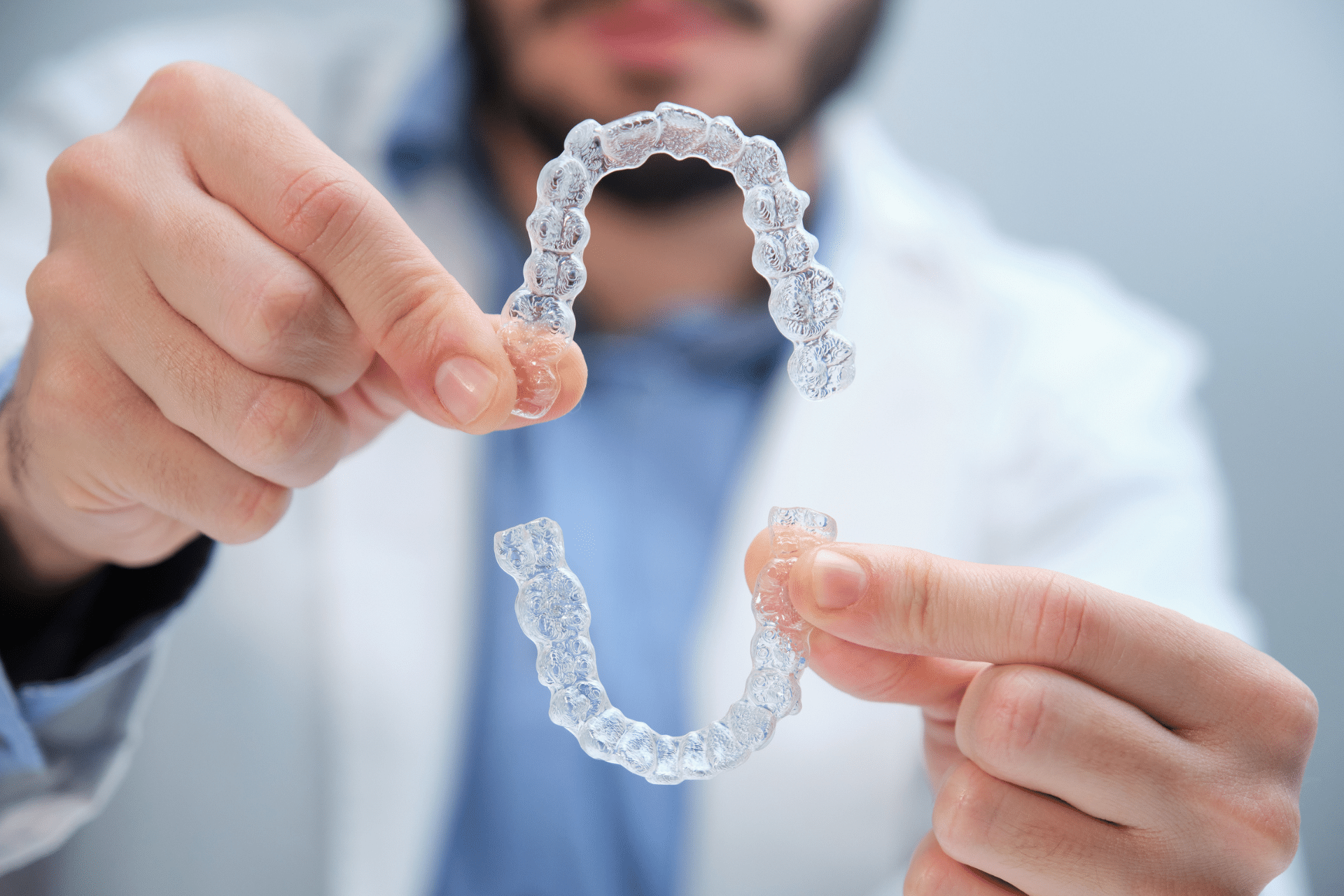
At Robert Stoner Orthodontics, Dr. Robert Stoner and Dr. Brennan Alford help patients in Greensboro, NC and surrounding communities understand their treatment options. Both are board-certified orthodontists who look at how the teeth and jaws fit together before recommending Invisalign or another type of care.
What Is a Crossbite and Why Should It Be Treated?
A crossbite happens when one or more upper teeth sit inside the lower teeth when you bite down. It can affect the front teeth, the back teeth, or both.
Some crossbites happen because teeth erupt or settle in the wrong position. Others are linked to jaw growth, such as a narrow upper jaw. Genetics and childhood habits, including long-term thumb sucking, can also play a role.
The American Association of Orthodontists explains that crossbites can lead to uneven tooth wear and a shift in the jaw. If the teeth do not meet evenly, some may take more pressure than others. Fixing the bite can help the teeth work together more evenly and may lower the risk of wear over time.
Which Crossbites Can Invisalign Treat?
Invisalign can treat many crossbites that can be improved by moving the teeth. The aligners use gentle pressure to guide selected teeth into better positions over time.
For example, an upper tooth that sits too far inside the lower arch may be moved outward. Nearby teeth may also need to shift so there is enough space and the bite fits better.
Whether Invisalign is a good choice depends on how many teeth are involved, how far they need to move, how much space is available, and how the upper and lower jaws fit together.
Clear aligners can appeal to teens and adults because they are removable and hard to notice. You can take them out for meals, brushing, and flossing. They still need to be worn as directed for treatment to stay on track.
When Might Another Treatment Be Better Than Invisalign?
Invisalign is not the best choice for every crossbite. Some bite problems need a treatment that does more than move the teeth.
A growing child with a narrow upper jaw, for example, may need a palatal expander. This appliance widens the upper jaw and can help correct a crossbite linked to limited jaw width. Robert Stoner Orthodontics also uses expanders as part of early orthodontic care for some children with crossbites.
Other cases may be treated more predictably with braces. Age and jaw growth can also affect which option makes the most sense.
This is why two crossbites that look alike may need different treatment. The cause of the problem matters just as much as how the bite looks.
How Does Invisalign Work During Crossbite Treatment?
Invisalign uses a series of custom clear aligners that move the teeth in small steps. Each set is worn for a short period before you move to the next one in the series.
Robert Stoner Orthodontics uses an iTero digital scanner to create a 3D image of the teeth for Invisalign planning. This helps the orthodontist map out how the teeth should move during treatment.
For the best results, Invisalign aligners are usually worn 20 to 22 hours each day. They are removed for eating, brushing, and flossing. Wearing them less than recommended can slow progress because the teeth are not getting the planned pressure for enough time.
How Long Can Crossbite Treatment With Invisalign Take?
There is no single timeline for treating a crossbite with Invisalign. Treatment length depends on how many teeth need to move, how much correction is needed, and whether other bite or alignment problems are being treated at the same time.
A simple case may take less time than one that needs more tooth movement. Some patients may also need extra aligners later to fine-tune the result.
Wearing the aligners as directed can also affect progress. After an orthodontic exam and digital scan, the orthodontist can give you a more useful estimate based on your bite and treatment plan.
Is Invisalign Right for Your Crossbite?
The right treatment depends on what is causing your crossbite and what needs to change. Invisalign may work well for some cases, while braces, an expander, or another option may be better for others.
At Robert Stoner Orthodontics, Dr. Stoner or Dr. Alford can check your bite and explain which treatment options may fit your needs. If you are concerned about a crossbite or want to explore orthodontic treatment for another reason, schedule a consultation in Greensboro, NC to discuss your goals.